Platform review
Revolut Business Review: Is It Worth the Fee?
Compare plans, currency tools, team cards, and integrations, with a closer look at the charges European businesses need to factor into their decision.
This article contains affiliate links. How this site is funded
The short version
The short version
- What it isA business bank account and financial operations platform combining multi-currency balances, local and international payments, corporate cards, expense controls, payment acceptance and software integrations.
- What it costsFor businesses registered in Spain, the current public plans start at €10 per month for Basic, €35 for Grow and €125 for Scale. Enterprise pricing is customised. Prices and allowances vary by country.
- What stands outRevolut Business is particularly strong for companies that receive, hold or pay money in several currencies, and for teams that need cards with clear limits and approval controls.
- What to checkThe monthly fee is only one part of the cost. Compare the FX allowance, transfer allowance, team features and add-on fees against your actual monthly activity.
- My viewIt is one of the most complete business accounts for a European company operating internationally. Basic is a sensible starting point; Grow becomes more interesting when the larger allowances and workflow tools replace manual work.
Revolut Business has developed from a convenient way to hold and exchange currencies into a broad financial operating account for companies. The core product now includes local account details, international transfers, physical and virtual cards, team permissions, expense management, invoicing, payment acceptance and integrations with accounting and HR tools.
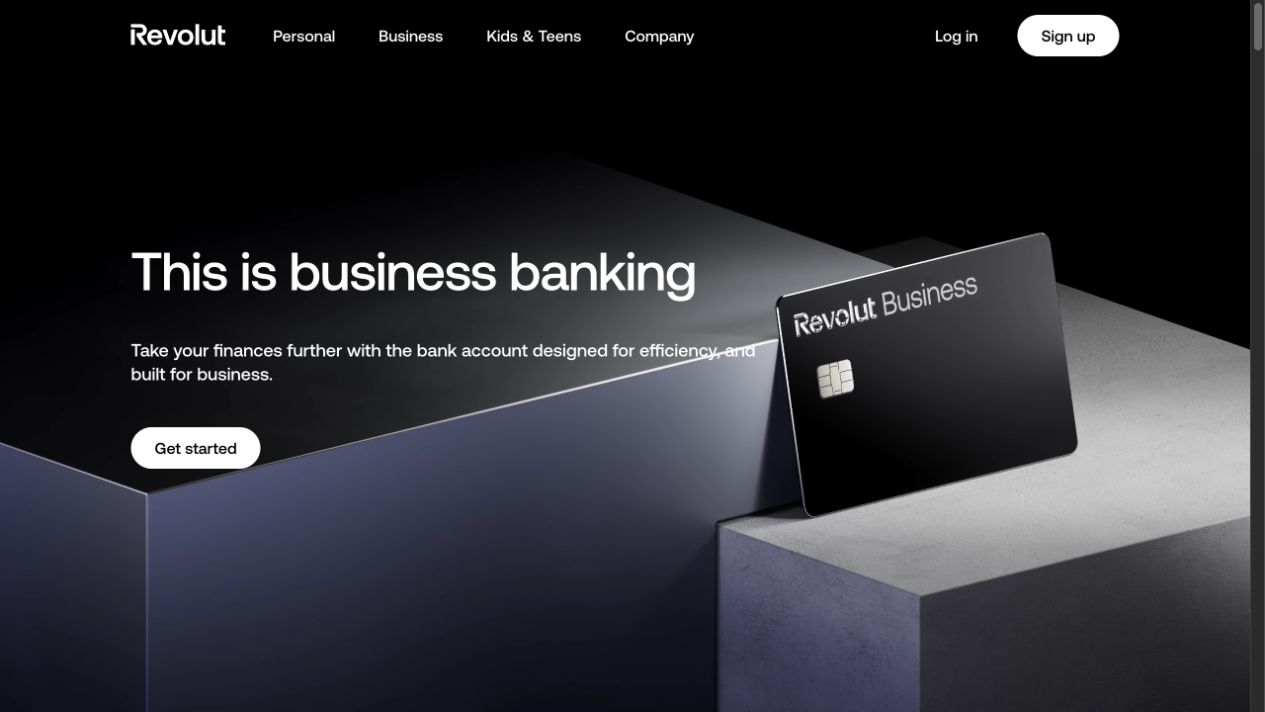
The current Revolut Business proposition combines a business account, global payments and company cards in one interface.
The attraction is easy to understand. A company can keep EUR, GBP, USD and other operating currencies together, exchange within the allowance of its plan, issue cards to team members and control spending without maintaining a separate tool for every task.
It is not automatically the cheapest account for every company. The value depends on how much foreign exchange, how many transfers and how many team workflows you actually use. A local business making only a few domestic EUR payments may be well served by the Basic plan. A company paying international contractors or managing a distributed team can justify Grow or Scale much more easily.
What Revolut Business is
Revolut Business is designed for incorporated companies and eligible sole traders rather than personal spending. The account can receive and send bank transfers, hold several currency balances, issue debit cards and give different people controlled access to the same company finances.
For a Spanish company, the current product includes a Spanish IBAN plus SWIFT/BIC details for international payments. The exact account details and available features depend on the country where the business is registered.
The product is broader than a conventional current account. Companies can also accept online or in-person payments, create and track invoices, manage expenses, connect accounting software and use an API on eligible plans. That breadth is the main reason to consider it: the account can replace several narrower payment and expense tools.
Who can open an account
Revolut says the business must be properly incorporated and active, registered in a supported country and operating in an eligible industry. For the EEA product, the legal address generally needs to be in the EEA, Switzerland or the United Kingdom.
Onboarding normally requires information about the company, its activity, directors, shareholders and beneficial owners. Identity and company documents may be requested, and more complex ownership structures can take longer to verify.
This is normal business-account compliance, but it is worth preparing the documents before starting. The advertised review target is not a guarantee that every account will open immediately.
Plans and pricing
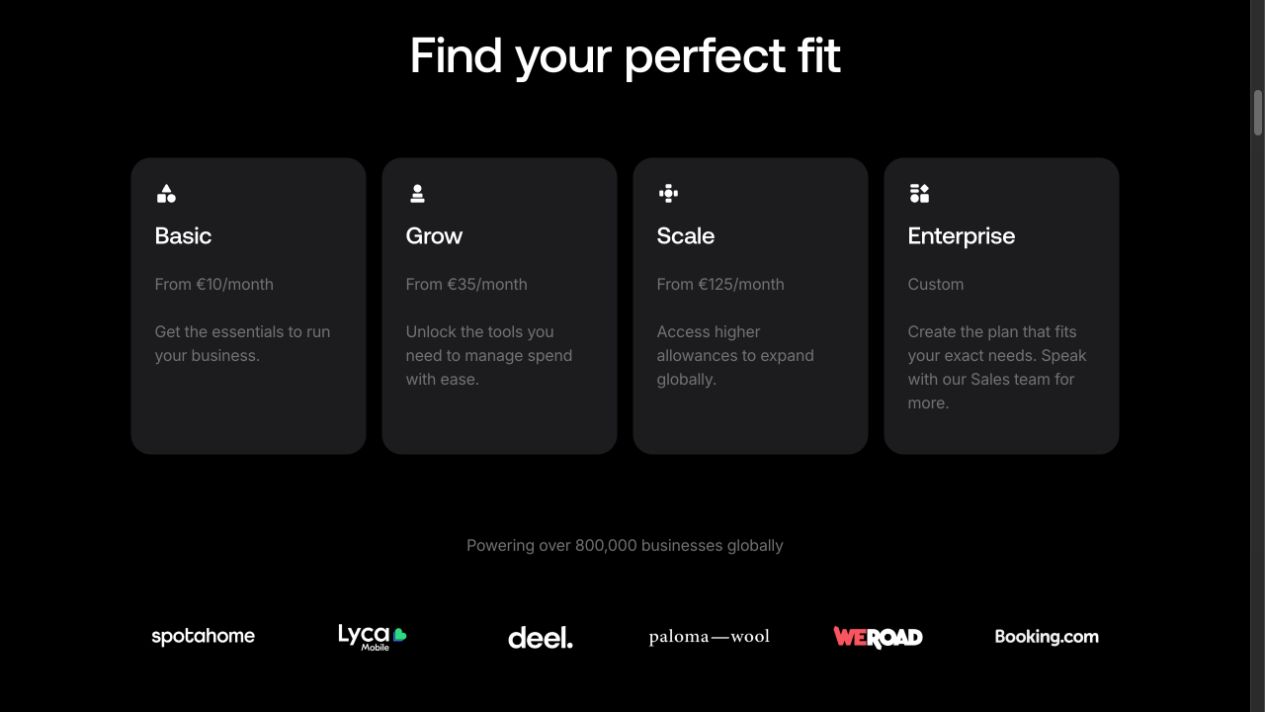
The English pricing page currently shows Basic from €10 per month, Grow from €35, Scale from €125 and custom Enterprise pricing for businesses in Spain.
The public Spanish pricing page currently lists four plans:
| Plan | Price | Best fit |
|---|---|---|
| Basic | From €10/month | Small companies needing the essential account, card and transfer functions |
| Grow | From €35/month | Companies with regular FX, team spending and workflow requirements |
| Scale | From €125/month | Larger international payment volumes and higher allowances |
| Enterprise | Custom | Companies needing negotiated limits, controls and support |
The important comparison is not simply €10 versus €35. Each plan includes different allowances for foreign exchange and transfers. Once an allowance is exceeded, usage fees apply. The Grow fee page, for example, currently shows a €15,000 monthly FX allowance for Spain, a 0.6% fee above that allowance and an additional 1% when exchanging outside foreign-exchange market hours.
That makes the calculation practical. Estimate a normal month of conversions, local transfers, international transfers, cards and active expense users. Then compare the total under each plan. Paying more for Grow can be rational when its allowances and automation save more than the extra subscription fee.
Prices, allowances and product availability change by country and can change over time. I would confirm the live comparison during signup rather than relying on an old pricing screenshot.
International transfers and currencies
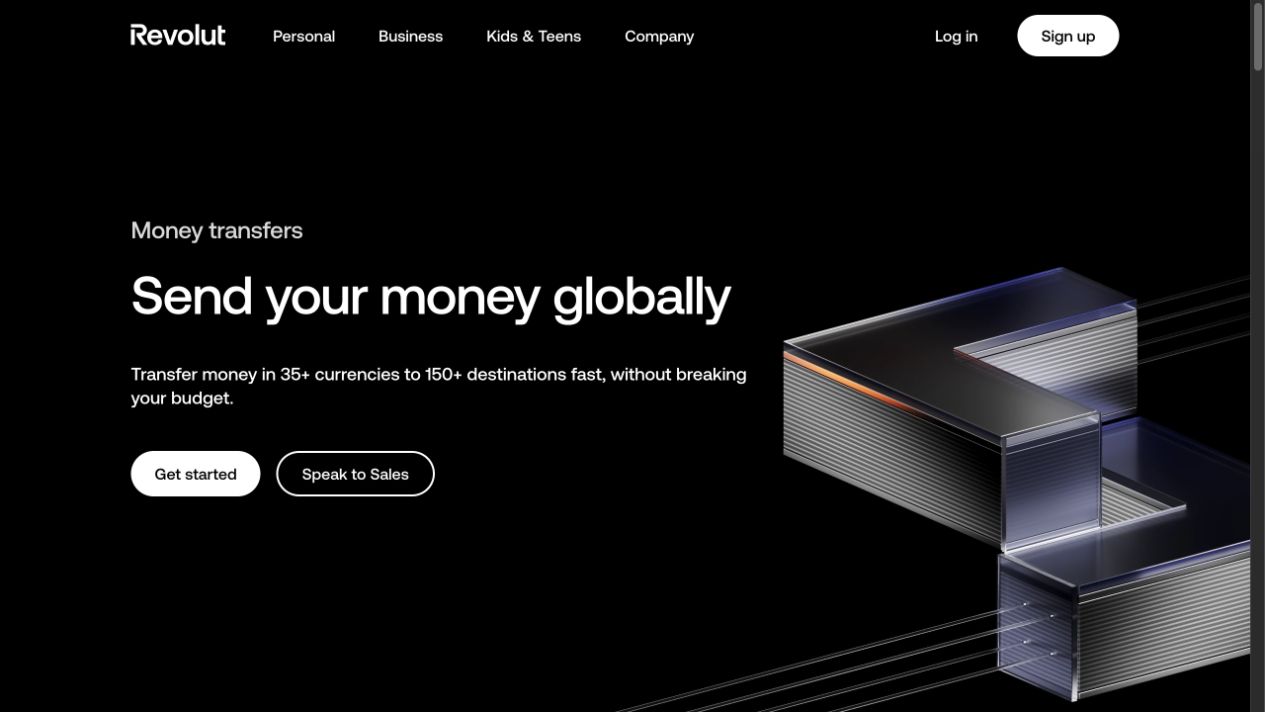
Revolut Business advertises transfers in more than 35 currencies to over 150 destinations.
This is the strongest use case for me. Revolut Business lets a company hold more than 25 currencies and send money in more than 35 currencies to over 150 destinations. Revolut-to-Revolut transfers are generally instant, and the Spanish product also supports local EUR account details and SEPA payments.
The interbank-rate message needs one qualification: it applies within the allowance of the selected plan and during market hours. Exchanging above the allowance or outside market hours can add fees. International transfer charges can also depend on the destination, payment rail and plan.
For a European company billing in EUR but paying software, contractors or suppliers in GBP and USD, having the balances and conversions in one account is useful. It reduces unnecessary conversions and makes the cost visible before confirming a payment.
I would still compare the final amount received by the beneficiary, not only the displayed exchange rate. Correspondent-bank fees and recipient-bank fees can matter on some international routes.
Cards and team spending
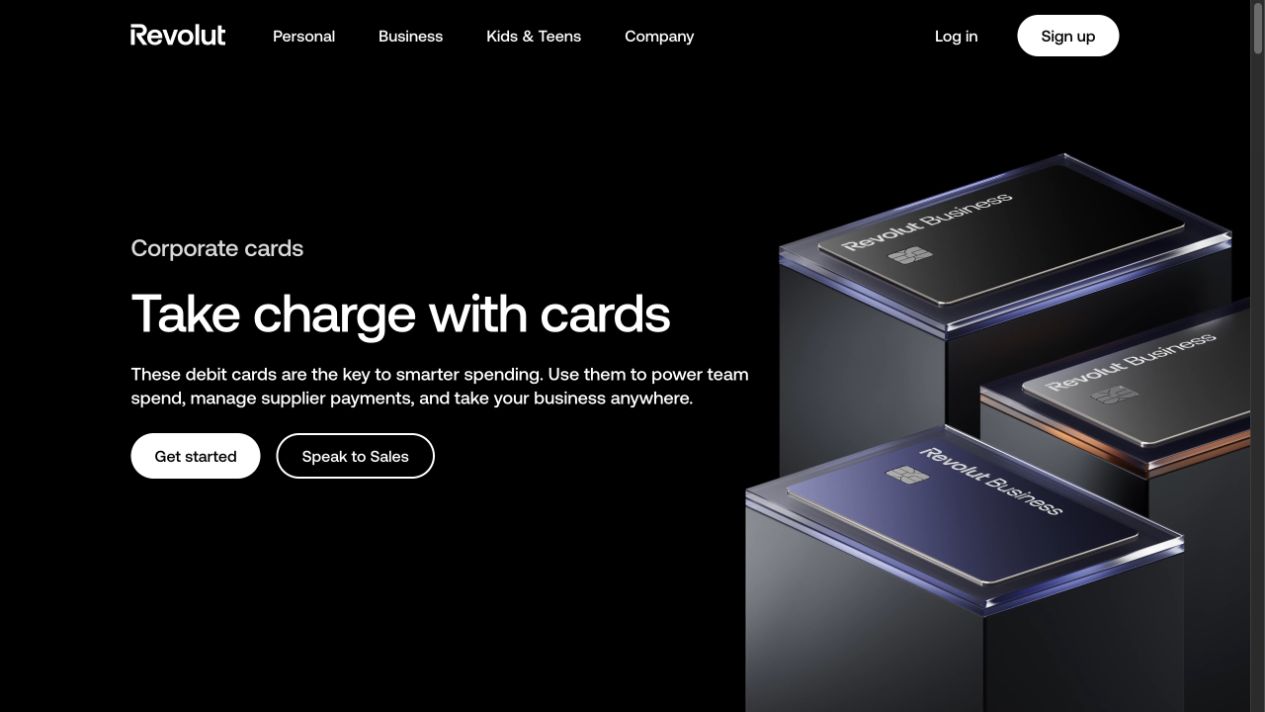
Physical and virtual debit cards can be issued for employees, suppliers, subscriptions and other controlled business spending.
Revolut Business supports physical and virtual company cards. The useful part is not the card design; it is the control layer behind each card.
An administrator can link a card to a particular account, set daily or monthly limits, restrict merchant categories or countries and define transaction limits. Virtual cards can separate subscriptions and supplier payments from general employee spending. If a card is compromised or no longer needed, it can be frozen without disrupting the rest of the account.
For a small remote team, this can remove a lot of reimbursement work. Employees spend from the company account under predefined rules, attach receipts and give the finance team a cleaner audit trail.
Some advanced approval workflows, expense features and Metal-card allowances depend on the plan or require an additional fee. A company should compare the cost per active user before replacing an existing expense platform.
Integrations and automation
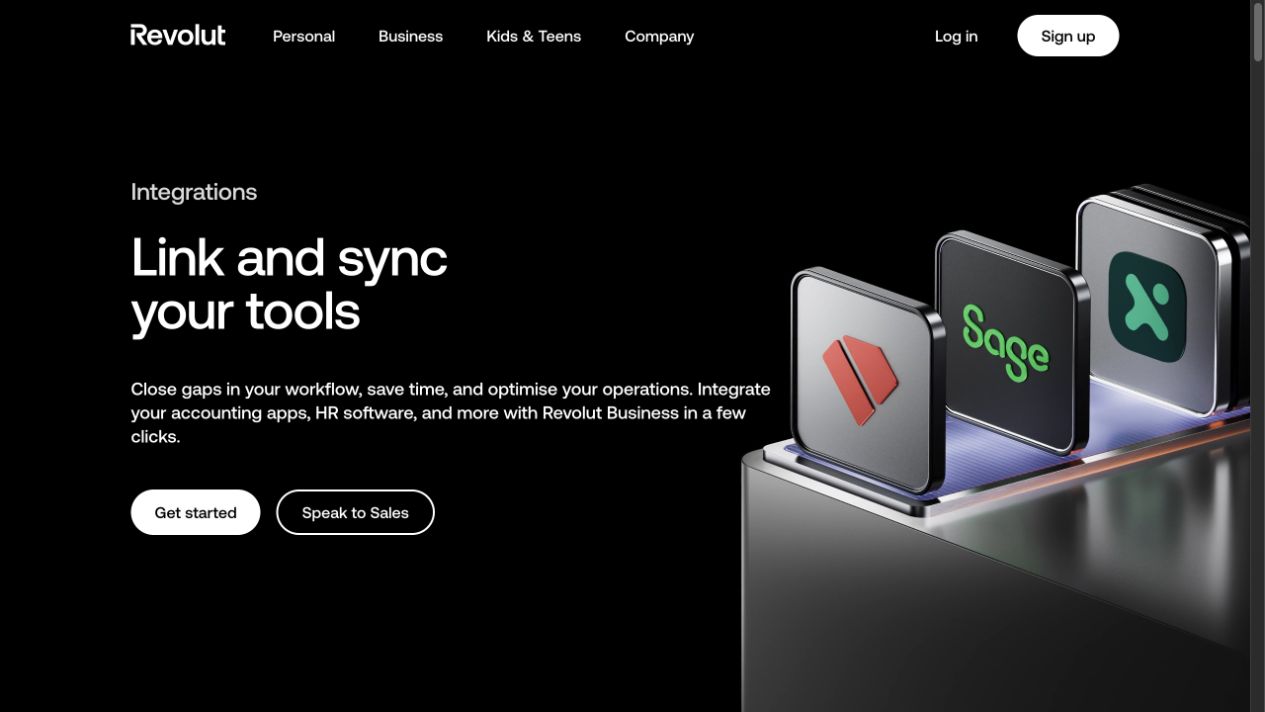
The integrations hub connects Revolut Business with accounting, HR and workflow tools.
The integration catalogue is another reason Revolut Business feels more mature than a simple multi-currency account. Current integrations include accounting tools such as Xero, QuickBooks, FreeAgent and Sage, alongside workflow and HR products such as Slack, Zapier, Google Workspace and BambooHR. Availability varies by country.
The aim is straightforward: transactions, categories, receipts and statements should reach the accounting system without repeated exports and manual reconciliation.
Businesses with custom workflows can also use the Business API. Revolut says API access is available on Grow, Scale and Enterprise plans. This can support payment automation, account monitoring and other internal finance processes, but it should be implemented with limited permissions and normal operational controls.
Is Revolut Business safe?
For EEA customers, the account is provided through Revolut Bank UAB or an applicable local branch. Revolut's Spanish help material states that money in the Revolut Business account is protected under the Lithuanian deposit insurance scheme, subject to the scheme's eligibility rules and exclusions, with a maximum of €100,000 for a single depositor across eligible deposits held with Revolut Bank UAB.
The distinction between products matters. Ordinary eligible bank deposits, savings products, money-market funds, payment-processing balances and crypto assets do not necessarily receive the same protection. The relevant entity and protection are shown in the account terms for each service.
On the operational side, Revolut Business supports roles and permissions, card controls, transaction monitoring and security settings. I would still apply the same controls I use with any business bank:
- Require strong authentication for every administrator.
- Give each team member only the permissions needed.
- Use approval rules for large payments.
- Keep supplier-detail changes separate from payment approval.
- Maintain a second banking relationship for payroll, tax and emergency liquidity.
That final point is important. Even a good digital bank can request additional information, delay a transfer for compliance review or experience an operational outage. A business should not allow one account to become a single point of failure.
What I like
The product is unusually coherent. Currency balances, transfers, cards and team controls sit in the same interface, and the integrations can move the resulting data into the accounting workflow.
The points I particularly like are:
- International focus: multi-currency balances and broad transfer coverage are central rather than optional extras.
- Clear team controls: cards can be limited by amount, merchant type, country and funding account.
- A sensible entry plan: €10 per month is accessible for a small European company testing the account.
- Scalable operations: Grow and Scale increase allowances and unlock more automation as activity expands.
- Strong integrations: accounting and HR connections reduce manual reconciliation.
- Good visibility: administrators can see team spending and account activity in real time.
What to keep in mind
Revolut Business is not a free business account. The subscription is predictable, but usage charges can still appear when the company exceeds its transfer or FX allowances.
The pricing page is also country-specific. A fee or feature shown for a Spanish company may not apply to a company registered in France, Germany, the Netherlands or the United Kingdom.
Finally, the broad product range can make plan comparison harder. Expenses, payment acceptance, BillPay, savings and other modules may have their own pricing or availability. I would begin with the account functions the business genuinely needs and add modules only when they replace a measurable amount of work.
Who Revolut Business is for
Revolut Business makes the most sense for:
- European companies receiving or paying money in several currencies;
- agencies, ecommerce businesses and software companies with international suppliers;
- remote teams needing controlled physical or virtual cards;
- finance teams wanting transactions and receipts synced with accounting software;
- companies that value fast web and mobile access alongside conventional bank transfers.
It is less compelling for a cash-heavy business, a company needing a large branch network or a purely domestic business whose existing bank already provides the required payments at a lower total cost.
Planning to invest company cash later? Opening a business account is separate from opening a company brokerage account. If your company subsequently trades securities subject to LEI reporting requirements, the broker may require a current code. My LEI guide explains the next steps, and LEI System is one registration and renewal provider. This note is part of a paid collaboration with LEI System; it does not imply that Revolut Business itself requires an LEI or provides the brokerage service discussed here.
Pros and cons
What works well
- Hold and exchange more than 25 currencies in one business account
- Send money in more than 35 currencies to over 150 destinations
- Plans start from €10 per month for businesses registered in Spain
- Physical and virtual cards with granular team spending controls
- Local EUR account details plus SWIFT/BIC access for Spanish companies
- Accounting, HR and workflow integrations
- Business API available on eligible higher plans
- Eligible EEA business deposits receive applicable deposit-insurance protection
What to consider
- No permanent free plan for the standard business account
- FX and transfer allowances vary by plan and country
- Fees can apply above allowances and outside market hours
- Some expense tools and advanced workflows cost extra
- Account opening can take longer for complex company structures
- A second bank account is still prudent for operational resilience
FAQ
How much does Revolut Business cost?+
Is Revolut Business a bank account?+
Is money in Revolut Business protected?+
What currencies does Revolut Business support?+
Can I give employees Revolut Business cards?+
Does Revolut Business integrate with accounting software?+
Is Revolut Business good for freelancers?+
Verdict
Revolut Business is one of the strongest all-round business accounts for a European company that operates across borders. The combination of multi-currency balances, international transfers, company cards and integrations solves a real operational problem, and the €10 Basic plan makes the product easy to test without committing to a large monthly cost.
The best plan depends on activity. Basic is enough for a small company with light usage. Grow is where the product becomes more compelling for regular FX, team spending and automation. Scale and Enterprise are designed for companies that can use the larger allowances and more advanced controls.
My view is positive. I would choose Revolut Business when international payments and team spending are recurring parts of the business, while keeping a second bank account for operational resilience. The key is to select the plan from real monthly volumes rather than from the longest feature list.
Explore Revolut Business

Thanks for reading.
Explore more of my experience with investing and building passive income.
Inside my portfolioKeep reading
LEI System’s prices, application and renewal terms, with a practical look at which plan suits your company.
How litigation funding works, what the public track record shows, and the fees, minimum investment, and risks to understand before committing money.
A closer look at mortgage-backed projects, target returns, minimum investment, regulation, and the risks involved in lending through this real estate platform.
Explore the loan types, governance, target returns, and loyalty programme, alongside the uncertainties that come with investing through a newer lending platform.
My experience with Romanian property lending, covering collateral, minimum investment, investor fees, target returns, and the risks behind the platform’s projects.
My investing results, how the buyback structure works, and what the platform’s licensing means when weighing it alongside other European lending options.